Elayna Trucker, Your May in Books: Fabulous fiction, notable nonfiction! - Napa Valley Register
Elayna Trucker, Your May in Books: Fabulous fiction, notable nonfiction! - Napa Valley Register |
- Elayna Trucker, Your May in Books: Fabulous fiction, notable nonfiction! - Napa Valley Register
- Odia and English author Manoj Das dies at 87; PM Modi mourns - The Indian Express
- ‘82 ORHS grad captures struggle of history’s ‘marginalized people’ - Oak Ridger
| Elayna Trucker, Your May in Books: Fabulous fiction, notable nonfiction! - Napa Valley Register Posted: 28 Apr 2021 09:51 AM PDT 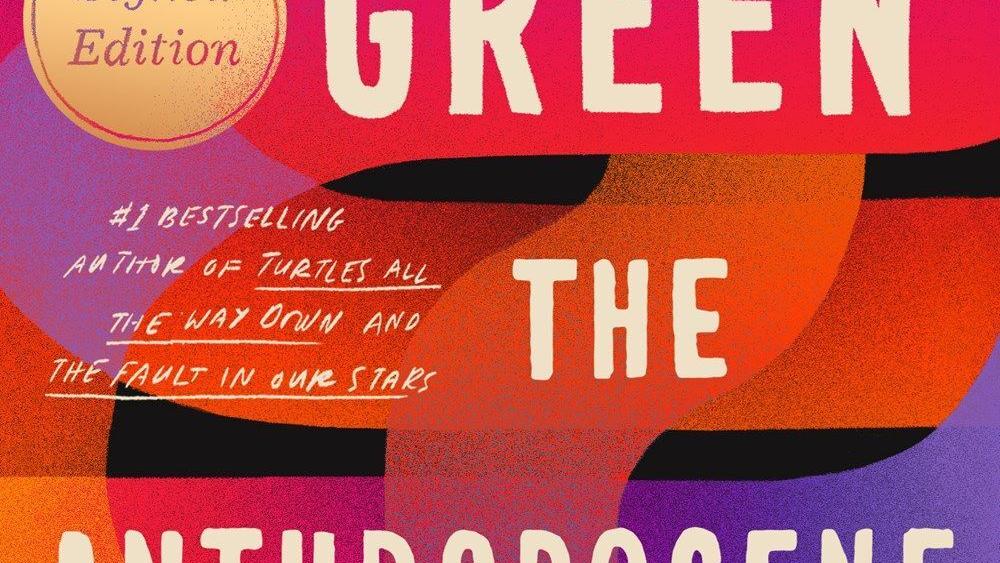 May brings us sunshine, flowers, and some really great new books! These forthcoming novels and nonfiction books are just the tips of the iceberg; be sure to visit your local bookstore to see what's new each week!  My bookshop is all abuzz with Claire Fuller's newest novel, "Unsettled Ground" (May 18). Fuller is a staff favorite; her quietly menacing novels are oddly enthralling, and not overburdened with plot. This fourth novel, like her others, features an absent mother and the damage both her parenting choices and her death have caused. Jeanie and Julius are 51-year-old twins who still live with their mother in a crumbling cabin on a corner of a much greater estate where they grow vegetables to feed themselves and sell in town. When their mother suddenly dies, they are left with an astonishing number of debts to repay and more than a few mysteries about their mother and the life she led them in. Readers who have read Fuller's previous novels will find much to enjoy here, with the added bonus of an actual happy ending, not something Fuller has provided in the past. The best part? Claire Fuller will be joining Napa Bookmine for a virtual event all the way from the UK on Saturday, May 22! Visit napabookmine.com for details.  I don't think Edward Rutherfurd could write a short book if he tried; his latest, "China" (May 11), is nearly 800 pages. Rutherfurd directs his incredible attention to detail to the history of China through the Opium Wars, the Cultural Revolution, and into the present. Fans of his work and of wide-sweeping generational sagas will not be disappointed by this story of the entwined fates of Chinese, American and British families. Those interested in the history of this fascinating, complicated nation will certainly find much to chew on here, while readers more taken with Rutherfurd's trademark romances and adventures will enjoy a treat as well.  Science fiction fans will rejoice at a new novel from Andy Weir, author of "The Martian." "Project Hail Mary" (May 4) features another scrappy hero, an astronaut with severe amnesia who wakes up to find himself the last living crew member on a spaceship millions of miles from Earth. As his memory returns, he comes to realize the great importance of his mission and understand that his failure would mean the end of humanity. Like "The Martian," this novel is filled with real science heavily researched and will keep you in suspense until the end. It's already been optioned for film, with Ryan Gosling set to star!  Readers who prefer nonfiction will be thrilled with Daniel James Brown's newest, "Facing the Mountain: A True Story of Japanese American Heroes in World War II" (May 11). The popular author of "The Boys in the Boat" is back with a deeply researched look at the sacrifices made and hardships faced by Japanese immigrants and their American-born children when Americans went to war.  The book focuses on four Japanese-American families whose sons volunteered for the 442nd Regimental Combat Team and fought in Europe, only to find their homes ransacked by the FBI after Pearl Harbor and their families thrown into internment camps. Brown weaves the story of these men and their families into the fabric of an American history defined by protest, resistance, and sacrifice. John Green is known mainly as the author of tear-jerking teen novels such as "The Fault in Our Stars" and "Looking for Alaska," but he also hosts the incredibly popular, wide-ranging podcast called "The Anthropocene Reviewed."  In a new book of the same name (May 18), Green adapts his podcast to the written word in the form of essays "on a human-centered planet." The essays feature topics such as Super Mario Kart, cholera, and the QWERTY keyboard, using each topic as an invitation to discuss broader themes of philosophy, science, and humor. This book features both adapted podcasts and new material. Green is a consummate storyteller; each snippet is bound to delight and enthrall. Daniel Kahneman's "Thinking Fast and Slow" was a blockbuster hit when it was released nearly 10 years ago, and still sells. For his latest book, the Nobel Prize-winning economist teams up with professor of strategic thinking and decision processes Olivier Sibony and popular political commentator and academic Cass R. Sunstein to look at why we make bad judgments and how this cognitive bias affects our lives. "Noise: A Flaw in Human Judgment" (May 18), seeks to explain why two people faced with the exact same situation will make different decisions. "Noise," in this context, refers to variability in judgments that should be the same but are not due to bias, and it creates problems for all of us in so many aspects of our lives. The research then points the way towards solutions in reducing noise and therefore bias, leading us all to better decision-making. Fans of Malcolm Gladwell and Michael Lewis will definitely want to pick this book. Books everyone should read are classics for a reason. Check out the books you should definitely have read by now as picked by our books editor. Quiz: Can you guess the writers behind these 50 famous quotes?Quiz: Can you guess the writers behind these 50 famous quotes? The modern world of enhanced brevity and rapidly consumed content is full of quotes by inspirational thinkers, leaders, artists, and, perhaps most notably, writers. Memorable quotes are ubiquitous on social media feeds, often referenced by politicians, and are plastered across any variety of merchandise, painted signs, and greeting cards. In the following quiz, Stacker put together a list of 50 famous quotes and the writers who coined them using data gathered from Goodreads, newspapers, magazines, book and poetry foundations, and author websites. Many of these quotes have become part of a common language. Others may be trickier to place. Some of the most popular quotes, which get repeatedly splashed around social media, are incorrectly assigned to the wrong person; others are completely inaccurate altogether. It's impossible to overstate the power of writers to inspire, comfort, or cure us from our experiences of loss, confusion, or flat-out boredom. They provide us with expansive bodies of work filled with snippets of gold. Poets often work to provide the most impact while taking up the least amount of space, but all writers are capable of expelling brilliant little quips of authentic wisdom, truth, and absurdity. They simply fall out of them. If by chance there aren't enough handy quotes in your lexicon, there are plenty in the following quiz, ranging from topics as disparate as politics and the tragedies of the human experience. It's a good thing too, as they come in handy and don't require much effort. Like author Dorothy L.Sayers says, "I always have a quotation for everything—it saves original thinking." You may also like: What American landmarks looked like under construction Quote #1 - Quote: "Being human is not hard because you're doing it wrong, it's hard because you're doing it right." Answer #1 - Answer: Written by Glennon Doyle in her bestselling book "Untamed," this quote speaks to the reader about the hardships of being human, and the worth of confronting those hardships head-on. Doyle has experienced profound changes in her journey of personal discovery, including going through a divorce, going sober, and working to recover from bulimia. Quote #2 - Quote: "Freedom is... the right to write the wrong words." Answer #2 - Answer: Patti Smith coined this phrase and many others you've likely heard. A writer, activist, singer, and performer, Smith is the kind of writer who writers aspire to emulate. She has had one of the most remarkable careers of any American artist in the 20th century, writing extensively about her experiences throughout. She received the National Book Award for "Just Kids" in 2010 and her album "Horses" was listed by Rolling Stone as one of the best of all time. Answer #3 - Answer: Allen Ginsberg helped define the Beat Generation, alongside friends and fellow writers including Jack Kerouac and William S. Burroughs. The quote is from his poem "America," which provides insight into how he reflected on the state of the country in 1956. Ginsberg's other great works include the epic poem "Howl" and "Kaddish and Other Poems." He incorporated political activism into his work and was a student of Buddhist philosophy. Quote #4 - Quote: "And the day came when the risk to remain tight in a bud was more painful than the risk it took to blossom." Answer #4 - Answer: Anaïs Nin's prolific career included an expansive series of diaries and a number of novels. Born in France in 1903, Nin became enmeshed in the midcentury sexual revolutions of Paris, and wrote exquisitely, with great depth, about her experiences with love, relationships, and the experience of being human. Her book "Delta of Venus" is a collection of erotica that was commissioned by a private collector. Quote #5 - Quote: "I love America more than any other country in the world and, exactly for this reason, I insist on the right to criticize her perpetually." Answer #5 - Answer: James Baldwin, born Aug. 2, 1924, is known for his novels, plays, and his analyses of race and civil rights. He was a persistent advocate for free speech, racial justice, and protest, and lived as an openly gay man. His works include powerful criticisms of discrimination and prejudice. Baldwin died from stomach cancer in 1987. You may also like: The most popular book the year you were born Quote #6 - Quote: "The stories we tell ourselves can feel like a weapon to someone else." Answer #6 - Answer: Thomas Page McBee wrote about his experiences and what it means to be a transgender man in "Man Alive," which numerous publications agreed was one of the best books of 2014. McBee's work explores gender and masculinity—but above all, he asks what it means to be human. McBee's writing has appeared in the New York Times, Glamour, and Playboy among many other outlets. Quote #7 - Quote: "What I regret most in my life are failures of kindness." Answer #7 - Answer: The essayist, novelist, and professor George Saunders included this line in his collection of essays titled "The Braindead Megaphone." Saunders didn't get his start until later in life, spending his early years working in some odd places, like a slaughterhouse in Texas, and as an oil field explorer in Sumatra. After receiving a master of arts from Syracuse University, where he now teaches, Saunders went on to write numerous books of short works, including revolutionary pieces of fiction like his novel, "Lincoln in the Bardo." Answer #8 - Answer: Rupi Kaur's work is everywhere, and is especially prevalent in just about anyone's social media feed. The Canadian poet, performer, and artist wrote, illustrated, and self-published her first book "Milk and Honey" and her second book "The Sun and Her Flowers." Together, these books have been translated into 42 languages and sold more than 8 million copies worldwide. Her work focuses on loss, healing, and growth. Quote #9 - Quote: "Poets are damned but they are not blind, they see with the eyes of angels." Answer #9 - Answer: Born in Rutherford, New Jersey on Sept. 17, 1883, William Carlos Williams spent his life working as a doctor while also writing poems, plays, short stories, and other works. His poetry was recognized with a Pulitzer Prize and Gold Medal for Poetry of the National Institute of Arts and Letters, among other awards. One of Williams' most prolific works, "Paterson," is an epic poem filling six books. Quote #10 - Quote: "We shall not cease from exploration, and the end of all our exploring will be to arrive where we started and know the place for the first time. Only those who will risk going too far can possibly find out how far one can go." Answer #10 - Answer: Thomas Stearn Ellion, more widely known as T. S. Elliot, produced a prodigious amount of work during his life. Born in St. Louis, Elliot later set down roots in Europe. His works attained him worldwide fame, a Nobel Prize, and honorary doctorate degrees. "The Waste Land" is one of his most well-known works, and a lasting contribution to American literature. You may also like: 50 classics from (almost) everyone's high school reading list Quote #11 - Quote: "You are never stronger... than when you land on the other side of despair." Answer #11 - Answer: Novelist and essayist Zadie Smith has made a wide impact with her written work. Born in London in 1975, Smith now teaches at New York University. Some of her most recognizable works include "White Teeth" and "Changing My Mind." Her work has also been featured in the Guardian, the New York Times, and the New Yorker. Quote #12 - Quote: "Everything I've ever let go of has claw marks on it." Answer #12 - Answer: The many works of David Foster Wallace include the 1,088-page novel "Infinite Jest" and "A Supposedly Fun Thing I'll Never Do Again: Essays and Arguments." His 2005 commencement speech for graduating students at Kenyon College, called "This Is Water," became a viral hit and contained many insights into his timeless mind. Wallace died by suicide in September 2008 at 46. Answer #13 - Answer: Walt Whitman shows what poets can do with minimal words and a finite amount of space, which is not to say that he didn't produce lengthy works. Yet Whitman had the ability to symbolize a great deal about universal truths in a single phrase. The above quote is from his most famous work, "Leaves of Grass," which contained three long poems. Quote #14 - Quote: "The Heart wants what it wants—or else it does not care." Answer #14 - Answer: Widely known as one of the greatest American poets of all time, Emily Dickinson produced a massive body of work, only a tiny fraction of which was published during her life. Her first published poetry collection, produced by colleagues she'd known in life, came out in 1890, though the initial edition suffered extensive edits. Her complete works weren't published until 1955. Quote #15 - Quote: "To be yourself in a world that is constantly trying to make you something else is the greatest accomplishment." Answer #15 - Answer: The author of "Self-Reliance and Other Essays," among other books and collections, Ralph Waldo Emerson was first a Unitarian minister before deciding to become a writer. His writing admonished the values of religious conservatives, and he is considered the originator of the school of thought known as Transcendentalism. His work lives on and remains influential today. You may also like: Photos of the year from the International Photography Awards Quote #16 - Quote: "Rather than love, than money, than fame, give me truth." Answer #16 - Answer: Few books on the art of simplicity and minimalism have remained as timeless as Henry David Thoreau's "Walden; or, Life in the Woods," which he wrote while living mostly alone in the Massachusetts woods on the edge of Walden Pond. His works created inspiration for many leaders born after him, especially on topics like civil disobedience, and nonviolent resistance. His writing is often credited for helping spark the modern environmental preservation movement. Quote #17 - Quote: "Do one thing every day that scares you." Answer #17 - Answer: This well-known, oft-repeated quote comes of course from author, activist, and political leader Eleanor Roosevelt. While serving as the First Lady after the election of her husband, President Franklin Delano Roosevelt, she promoted the policies of the New Deal. After the president's death, the First Lady went on to serve in the United Nations, spending much of her life working on issues around equality and human rights. Answer #18 - Answer: Writer and civil rights activist Maya Angelou had a huge impact on American literature and culture. Her most famous book, "I Know Why the Caged Bird Sings," is an autobiographical tale of her life and experiences growing up in the South and speaks to the effects of racial prejudice. Among many accomplishments, Angelou received the National Book Award and was nominated for a Pulitzer Prize. Quote #19 - Quote: "Tell me, what is it you plan to do with your one wild and precious life?" Answer #19 - Answer: Mary Oliver spent her entire life not only writing but living her poetry. The above line from her poem, "The Summer Day," is a clear window into how she worked to maintain, and acknowledge the presence of the remarkable. Born in Ohio, Oliver spent most of her later years on Cape Cod where she wrote at length about the natural beauty which surrounded her. Oliver died in 2019 at age 83. Quote #20 - Quote: "Fighting for peace is like screwing for virginity." Answer #20 - Answer: George Carlin said what people needed to hear in blunt, beautiful, and often highly inappropriate statements. Nevertheless, Carlin's taboo humor and writing held deep wisdom that attracted countless fans. A critic of American systems, and just about every system, Carlin espoused his philosophies through comedic performances and a number of books. You may also like: Famous works of art from 30 countries around the world Quote #21 - Quote: "I mingle with my peers or no one, and since I have no peers, I mingle with no one." Answer #21 - Answer: John Kennedy Tool wrote two novels. The first, "The Neon Bible," which he wrote at 16 and was a submission for a writing contest. The second, and most famous novel, "A Confederacy of Dunces," described the absurd, despicable adventures of Ignatious Reilly and his life in New Orleans. It was discovered by his mother after his death by suicide in 1969 and published soon after. He was posthumously awarded literature's top honor, the Pulitzer Prize for fiction, in 1981. Quote #22 - Quote: "We are homesick most for the places we have never known." Answer #22 - Answer: Carson McCullers helped define Southern gothic literature with her pivotal first novel "The Heart is a Lonely Hunter." Written when she was only 23, the book received great acclaim soon after publication. She went on to write seven more books in her life. Her writing dealt with themes of gender fluidity well before the time that ideas like that were commonplace. Both her first novel and "Reflections in a Golden Eye" were turned into films. McCullers died in September 1967 after suffering from myriad health issues. Answer #23 - Answer: Best known for his science fiction and fantasy stories, Howard Phillips (H.P.) Lovecraft created lasting themes that influence modern creative works to this day. His work dealt with the mythic, the dark, and the insane. Though his works appeared in magazines and journals during his lifetime, Lovecraft's work was not collected and published in books until after his death in 1937. Quote #24 - Quote: "One day I will find the right words, and they will be simple." Answer #24 - Answer: Jack Kerouac, Beat writer and author of one of the most quintessential traveler's bibles, "On the Road," had nearly given up on his writing career when he achieved commercial success with his first novel in 1957. His stream of consciousness style of writing, along with his tendency to ramble through his words the way he rambled through the American landscape, has been both criticized and praised since it's creation. Kerouac was a student of Eastern philosophy and a lover of jazz. Quote #25 - Quote: "Freedom begins between the ears." Answer #25 - Answer: Edward Abbey was an individual, a thinker, a philosopher, and an environmentalist who created the term "monkey-wrenching," which was a practice of forcefully stopping the destruction of natural resources by damaging equipment. He was a self-proclaimed anarchist, and spent years in the desert working as a fire lookout for the National Parks Service. After his death in 1989, in a moment fitting with his autobiographical story, "Desert Solitaire," Abbey was buried without a coffin in an unmarked space, dressed only in a sleeping bag. You may also like: Influential artists of the 20th century Quote #26 - Quote: "The function of freedom is to free someone else." Answer #26 - Answer: Toni Morrison left behind a legacy as a profound storyteller, and lived as an example of how artists could work to confront the status quo. In 1993, Morrison was the first African American woman to receive the coveted Nobel Prize in literature. Her body of work includes children's books, novels, and essays. Quote #27 - Quote: "I would not have you descend into your own dream. I would have you be a conscious citizen of this terrible and beautiful world." Answer #27 - Answer: New York-based writer Ta-Nehisi Coates has achieved a number of awards and nominations for his bestselling book "Between the World and Me," a story about how a father reckons with America's racist history. Coates has written many books since, including most recently, his first novel "The Water Dancer." Coates is the current writer of both the "Black Panther" and "Captain America" comic book series. Answer #28 - Answer: Hunter S. Thompson defined what came to be known as Gonzo journalism, where the writers become lodged in the center of the stories they are assigned to cover. His drug-addled work—and prolific attempt to cover a motorcycle race in the desert—led to the novel "Fear and Loathing in Las Vegas." Thompson was a longtime writer for Rolling Stone magazine, ran for Sheriff of Aspen, Colorado, and covered the Hell's Angels from the inside, among many of his wild and notable achievements. Quote #29 - Quote: "Ruin is a gift. Ruin is the road to transformation." Answer #29 - Answer: Elizabeth Gilbert is best known for her novel "Eat, Pray, Love," about her search for freedom and discovery after taking a year to live abroad and focus on herself. After the tremendous success of the book, Gilbert has written more on the subjects of magic and creativity, discussing how artists choose whether or not to follow their ideas and listen to inspiration. Her most recent novel is "City of Girls." Quote #30 - Quote: "The practice of art isn't to make a living. It's to make your soul grow." Answer #30 - Answer: Kurt Vonnegut was born in Indiana, served in World War II, and sold Saabs in Cape Cod. He was also a gifted writer. After the success of "Slaughterhouse-Five," inspired by Vonnegut's time in Dresden during the war, he no longer had to sell cars to feed his family and was vaulted into the lineage of great American writers. He was an avowed humanist and socialist, and retained those values throughout his life. You may also like: Popular children's books published the year you were born Quote #31 - Quote: "In a time of deceit, telling the truth is a revolutionary act." Answer #31 - Answer: George Orwell most notably wrote social commentaries through the lens of fiction. His two bestselling works, "1984" and "Animal Farm," made him one of the most successful authors of the 20th century. Before his success in writing, Orwell worked for the Indian Imperial Police while living in Burma and wrote propaganda for the BBC. His influence on popular culture remains, especially as privacy issues erode, along with a fleeting sense of the existence of individual freedoms across the connected, modern world. Quote #32 - Quote: "There is nothing to writing. All you do is sit down at a typewriter and bleed." Answer #32 - Answer: Ernest Hemingway was a journalist, novelist, and short-story writer who is best known for his fiction. "A Farewell to Arms," Hemingway's first novel, was based around his experiences as an ambulance driver on the Italian front during World War II. His adventures continued, as did his outsized life. Each experience led to beautifully written stories which earned him a Nobel Prize. Answer #33 - Answer: Ayn Rand immigrated to the United States from Russian in 1926. Soon after, she began her life in Hollywood, working at a film studio by day and writing at night. Rand's works centered around individuals striving toward their own goals on their own, free of any influence or support. This philosophy, coined "objectivism," has been used to support libertarian ideologies and small-government policies. Quote #34 - Quote: "I have no money, no resources, no hopes. I am the happiest man alive." Answer #34 - Answer: Henry Miller was born in New York City, yet he did much of his writing in Paris. His novels were considered vulgar and obscene, as he wrote freely about sex, love, and his relationship with fellow writer Anaïs Nin. At the end of his life, Miller settled in Big Sur, California, where he compiled the short story collection "Stand Still Like the Hummingbird." There remains today a memorial library in Big Sur that sells his work and hosts art and performances from other creators. Quote #35 - Quote: "The only way to support a revolution is to make your own." Answer #35 - Answer: Political activist, writer, and anarchist, Abbie Hoffman wrote various essays, an autobiography, and the extremely popular "Steal This Book." After an arrest for cocaine distribution, which might have been a setup, Hoffman went on the run from the police for a number of years. Even after undergoing plastic surgery to alter his appearance, Hoffman was eventually arrested again. He remained an activist and ardent leftist throughout his life. You may also like: Iconic buildings from every state Quote #36 - Quote: "If our Founding Fathers wanted us to care about the rest of the world, they wouldn't have declared their independence from it." Answer #36 - Answer: Actor, comedian, late-night host, and writer Stephen Colbert writes biting satire on American life. At the beginning of his career, Colbert wanted to be a serious actor; then he fell in love with the art of improvisation, changing his career path entirely. In 2007, his satirical take on the country, "I Am America (And So Can You!)," hit the top spot on the New York Times bestseller list. Quote #37 - Quote: "There is nothing gutsier to me than a person announcing that their story is one that deserves to be told, especially if that person is a woman." Answer #37 - Answer: Lena Dunham is best known for her screenwriting and acting roles, but she's written for various outlets and released her first book, "Not That Kind of Girl: A Young Woman Tells You What She's Learned," in 2012. Dunham has been named one of Time magazine's most influential people. She's earned two Golden Globes and several Emmy nominations for her HBO show "Girls." Answer #38 - Answer: David Sedaris is a Grammy-nominated humorist, radio performer, and writer. His books include "Me Talk Pretty One Day," and "When You're Engulfed in Flames." Sedaris writes about his life, his family, and the world with a cynic's humor and the softness of someone who is uncomfortably settled into the mixed bag that is human existence. Brought up in Raleigh, North Carolina, Sedaris lives in Paris with his partner. Quote #39 - Quote: "Do not wait for the healing to arrive. It will never come. The holes will never leave or be filled with anything at all. But holes are interesting things." Answer #39 - Answer: Augusten Burroughs has no formal education in writing, but he managed to work for years as an advertising copywriter and, one day, felt compelled to write a novel, which he sat down and finished in seven days. His popular memoir about growing up amid dysfunction, "Running With Scissors," remained on the New York Times bestseller list for four years. Burroughs also wrote the memoir "Dry" about his time in advertising and how he got sober. Quote #40 - Quote: "Prejudice, a dirty word, and faith, a clean one, have something in common: They both begin where reason ends." Answer #40 - Answer: Harper Lee grew up a tomboy in Alabama, went to a girl's college, and worked as a clerk before deciding to dive fully into her writing. Lee found herself an agent after writing some long stories; from there, her friends gifted her a year's worth of wages in order to allow her to do nothing but write. In that year Lee completed "To Kill a Mockingbird," one of the most famous works in American literary history. You may also like: 50 bestselling audiobooks Quote #41 - Quote: "I do not fear death. I had been dead for billions and billions of years before I was born, and had not suffered the slightest inconvenience from it." Answer #41 - Answer: Samuel Clemens, better known by his pen name Mark Twain, was a humorist, essayist, and novelist who wrote about the journeys of Tom Sawyer and his good friend Huck Finn. Before succeeding as a novelist, Twain was a master pilot on a Mississippi tugboat, and a journalist. Notoriously bad with money, he squandered his fortunes and eventually required the help of a friend in order to pay back his debts. Quote #42 - Quote: "If a story is in you, it has to come out." Answer #42 - Answer: William is easily one of the most impactful writers in American history. His works included the novels "As I Lay Dying" and "The Sound and the Fury," along with essays, poems, and screenplays. Born in Mississippi, The Nobel Prize-winner often wrote about his homeland, with many of his stories taking place in the South. Answer #43 - Answer: Octavia Butler created fantasy worlds after growing up in a reality where she depended on her imagination for solace as a child. After being encouraged to pursue a science fiction writing workshop while attending community college, Butler began writing and selling her work. She was awarded a McArthur Genius award in 1995. Butler died of a stroke in February 2006 at 56. Quote #44 - Quote: "I don't care what anybody says about me as long as it isn't true." Answer #44 - Answer: Truman Capote was an influential American writer who wrote "Breakfast at Tiffany's and Three Stories," one of many works that later brought to the screen. Capote wrote fiction and non-fiction. "In Cold Blood" a story about a family murdered in Kansas, and the individuals arrested for the murder, became wildly successful. Quote #45 - Quote: "In this possibly terminal phase of human existence, democracy and freedom are more than just ideals to be valued—they may be essential to survival." Answer #45 - Answer: Noam Chomsky—one of the great American philosophers and writers alive today—writes at length about politics, psychology, and social issues. His political activism and critiques of behavioral psychology established him early in his career as an idealist who didn't fear questioning established norms. His recent work has included discussions about the loss of freedoms in the globalized digital age. You may also like: Books that have sold over 50 million copies Quote #46 - Quote: "It takes a lot of time to be a genius. You have to sit around so much, doing nothing, really doing nothing." Answer #46 - Answer: Pennsylvania-born writer Gertrude Stein spent most of her life in Paris where she wrote novels, plays, and poetry. Perhaps just as notable as the works she produced were the connections and conversations she fostered. Stein regularly hosted a salon in her apartment, with guests like Pablo Picasso, Ernest Hemingway, Henri Matisse, and F. Scott Fitzgerald often in attendance. Quote #47 - Quote: "There should be a place where only the things you want to happen, happen." Answer #47 - Answer: Beloved children's book author and illustrator Maurice Sendak wrote the line above in his wildly popular book, "Where the Wild Things Are." Born and raised in New York City, Sendak decided to become an illustrator at 12 after seeing the movie "Fantasia." His portfolio also includes "In the Night Kitchen," and "Alligators All Around," among others. Answer #48 - Answer: The now-famous author of "Moby-Dick, or The Whale," Herman Melville never received much acclaim for his work while he was alive. It was the story of the great white whale, the one known by all today, which caused critics to disregard his work, contributing to his downfall as a writer. He continued to find work publishing short stories and traveling to give lectures. Quote #49 - Quote: "Don't ever tell anybody anything. If you do, you start missing everybody." Answer #49 - Answer: J.D. Salinger is best known for writing "Catcher in the Rye," a novel centering around the ever-curious, lost, and alienated Holden Caulfield. After the tremendous success of that book, Salinger became reclusive, staying away from the public eye while living in a small New Hampshire town. He published a few story collections after that but was never able to bring another novel to publication in his lifetime. Quote #50 - Quote: "I have never listened to anyone who criticized my taste in space travel, sideshows or gorillas. When this occurs, I pack up my dinosaurs and leave the room." Answer #50 - Answer: Ray Bradbury authored numerous books, including the science-fiction classics "The Martian Chronicles," and "Fahrenheit 451," the latter of which offers a window into a future world where the written word is banned. Bradbury worked in other mediums as well and received an Emmy award for "The Halloween Tree," along with an Oscar nomination for an animated film titled, "Icarus Montgolfier Wright." Awards for his writing include the Benjamin Franklin Award, the World Fantasy Award for Lifetime Achievement, and the O. Henry Memorial Award. You may also like: 100 of the best books by Black Americans Elayna Trucker is buyer at Napa Bookmine. Contact her at elayna@napabookmine.com.  |
| Odia and English author Manoj Das dies at 87; PM Modi mourns - The Indian Express Posted: 27 Apr 2021 11:54 PM PDT Manoj Das, an eminent Indian author who wrote in Odia and English, passed away at the age of 87 on Tuesday, April 27, 2021. On his demise, Prime Minister Narendra Modi took to social media to speak about his contributions. "Shri Manoj Das distinguished himself as a noted educationist, popular columnist and prolific writer. He made rich contributions to English and Odia literature. He was a leading exponent of Sri Aurobindo's philosophy. Pained by his demise. Condolences to his family. Om Shanti," he tweeted.
President Ram Nath Kovind also expressed condolences. "The passing of Manoj Das is a huge loss to the world of Odia & English writing. His towering stature as a fiction writer, his simplicity & spirituality gave him a unique identity. A Padma Bhushan, he was given many prestigious awards. My condolences to his family and admirers," he wrote.
Born on February 27, 1934, Das started writing quite early in his life. His first book of poetry Satavdira Artanada, in Odia, was published when he was in high school, after which he also launched a literary magazine and a collection of short stories. He continued writing during his college years and published a novel Jeebanara Swada, a collection of short stories Vishakanyar Kahani, and a collection of poems Padadhawani. His quest for mysticism motivated him to become an inmate of Sri Aurobindo Ashram in Puducherry. Since 1963, he had been a professor of English literature and philosophy there. Das was awarded Padma Shri in 2001 and Padma Bhushan in 2020 for his contributions in the field of literature and education. He received the first Sri Aurobindo Puraskar for his research on the lesser-known facts of India's freedom struggle led by Aurobindo. He was also honoured with the Sahitya Akademi Award fellowship.  |
| ‘82 ORHS grad captures struggle of history’s ‘marginalized people’ - Oak Ridger Posted: 27 Apr 2021 04:16 PM PDT  Benita Albert brings us the story of an amazing historian, Laura Edwards. She is much more than that, but I admire her ability to focus on the history often missed in the standard history documents. Laura is unique in her dedication to the lesser known history of the people who were not in the mainsteam of history yet were even more important than much of what is thought of as primary history. Enjoy learning about this amazingly well educated and highly productive graduate of Oak Ridge Schools. *** Laura F. Edwards, a 1982 Oak Ridge High School (ORHS) alumna, is a noted historian, educator, and author with acclaimed work in the history of gender, sexuality, and feminist studies. Her extensive writings document the struggle for rights for "marginalized people" in 19th Century America. Those people of "marginalized status" included enslaved people, free people of color, and women. I was lucky to make contact with this extraordinarily busy woman, one who is preparing to transition from her position as the Peabody Family Professor of History and Gender, Sexist and Feminist Studies at Duke University to assume the position of The Class of 1921 Bicentennial Professor in the History of American Law and Liberty at Princeton University. Social activist and famed author Alice Walker once said, "No one is your friend who demands your silence or denies your right to grow." Edwards would certainly qualify as Alice's "friend" as she uses her scholarly efforts to unveil practices and policies of the past which discouraged and/or disallowed human rights in America. She gives a voice to the "marginalized" and in so doing has advanced the understanding of the evolution of law and of cultural norms. She wrote, "History is not something we can leave behind or repeat. It's part of us, whether we like it or not. So, it's best to know what it is. In fact, we have to, if we want to know ourselves, see where we are, and try to figure out what to do about it." As Laura prepares to move, she is also in the midst of publishing two new books. She just had her engagingly titled paper, "James and His Striped Velvet Pantaloons: Textiles, Commerce, and Law in the New Republic," released in the Journal of American History, September 2020. In spite of her busy schedule, Laura graciously agreed to grant me an interview and to allow me to tell her inspiring story. I asked Laura to go back to her Oak Ridge roots and recall the influences that shaped her eventual career. Her journey was not linear, but her choices speak to the independent, curious, and innovative educator and writer that she has become. This Part One article will focus on her Oak Ridge story while a later, Part Two, installment will feature her academic and professional career. Laura's maternal grandparents, George and Josephine Rennich, arrived in Oak Ridge in 1953 when George began work in chemical engineering at the Oak Ridge National Laboratory (ORNL). George was in the military when he was pulled from an Army line during World War II to work on the Manhattan Project, because it was learned that he had pre-war experience working with uranium for a company named Vitro in New York. Josephine, a former teacher, was a busy mother to their five young children. Their oldest child, Sandra, was 10 when they arrived in Oak Ridge, and she would graduate from ORHS in 1961. Sandra married Robert Edwards in the early 1960s while he was employed at ORNL. The young couple moved for Robert's work to Phoenix, Ariz., to outside Washington, D.C., and to Connecticut before returning to Oak Ridge in 1975. Their only child, Laura, entered the fifth grade at Linden Elementary School. Robert worked as an electrical engineer and later moved into computer science. Sandra began work as a technical writer during Laura's teenage years. Laura wrote that her mother was active in local community organizations, including Save our Cumberland Mountains and the League of Women Voters. Her parents are now retired and still live in Oak Ridge. Laura has special memories of her Robertsville Junior High language arts teacher, Judy Kidd. She wrote, "I had always wanted to be a writer, and I loved all the books and activities in her class. Until this class, reading had been about the technical aspects of the actual reading; it was about basic literacy. Mrs. Kidd's class was the first time we talked about the structure of the books we were reading: about characters, plot, imagery, symbolism, narrative, etc. … It was eye opening for me." Of ORHS, Laura recalled, "I loved Carol Yoakley's AP (Advanced Placement) English course, which I took in my senior year. The focus there was composition, with weekly short essays and a longer 20-25 page term paper at the end of the course. It was a classic composition course, of the kind that college freshmen routinely take. The short, five-paragraph papers were all based in classic short stories selected to highlight elements of writing. Basically, it dealt with all the issues I had been introduced to in Mrs. Kidd's course and that I found so fascinating. I loved analyzing the short stories and writing these papers." "I also loved the final assignment because it was so challenging. Twenty pages seemed really long at the time — and it was, given that I had never written anything that long. Trying to figure out a thesis that would be 'big' enough interesting and original enough — to develop … was hard, but fun. I recall sitting amidst notes, writing and revising late into the night, trying to get the ideas out of my head and on to the paper in the right order." Little did Laura yet know that this would become a major stepping stone to her career, which now includes numerous scholarly publications and books. Her passion for writing was further defined in ORHS history coursework her senior year. She fondly wrote of her ORHS AP European History teacher, John Shedd: "He was introduced to us as a Ph.D. candidate from the University of Tennessee, and I was thrilled to think that we would have someone with that training. It seemed enticingly close to where I wanted to go (history courses at the college level) and what I wanted a be (a historian)." "He knew the material beyond the text, and he made it come alive. Looking back, I realize that he taught the course more like a college class than a high school class — which was why I loved it. … He integrated primary documents and other materials with the assigned text, and he asked us to use the background from the text to analyze what we were seeing in the primary materials. Basically, he was asking us to be historians, and he introduced us to the way the discipline worked. I still rely on concepts and ideas I learned in that class." For the second semester of her senior year, Laura reported, "I talked Mr. Shedd into doing an independent study with me on modern European intellectual history. We went though the key thinkers in the cannon as well as key schools of thought which involved not just political thinkers, but also music, art, and architecture. I recall the Existentialists with particular clarity. The transition from Classical to Romantic actually figures into lectures I do in my legal history course, as does the transition to Modernism. ... Mr. Shedd saved me, by grounding me and making the future I hoped to inhabit seem possible. I will always be thankful for that." In sixth grade, Laura began playing the oboe, and as she put it, "That became my passion." She took private lessons on both the oboe and piano, and in her ninth-grade year, she applied for admission to the selective Interlochen Arts Academy in Michigan. She was accepted and attended for her sophomore and junior years. After much reflection, she reached a decision: "I was just good. I wasn't great, and I knew I would never be, because I didn't love it enough. But I loved history, and I knew that's what I wanted to do." Returning to ORHS for her senior year, Laura did continue playing the oboe both in the ORHS Orchestra and the Oak Ridge Symphony, as well as occasional gigs, including work as a substitute in the production of "The Mikado" for the 1982 World's Fair. She credits her Interlochen junior year and an AP U.S. History course for "hooking" her. She wrote, "I took every history course I could. Even got permission to take a course during one (of two) of my lunch periods." She credits two teachers, saying: "They opened up a new world to me, one where you could take evidence and then try to get into the past and understand how it worked. That leap — into strange worlds — was amazing. I realized that it was also about the present. In seeing what was different about the past, you could also see what you were taking for granted in the present. The past made you see everything around you differently." She continued, "I just didn't know what being a historian meant: I knew what being a musician looked like because I had seen examples, but I didn't know what 'being a historian' was about. Basically, I did not know that there was a path through graduate school to an academic career at that point. I did know, however, that I needed to change course and acquire the academic background that would make it possible to apply to colleges and universities as a liberal arts major, not a music major." "That would be difficult given my transcript from Interlochen which was heavy on orchestra, private music lessons, and chamber music credits. So, I decided to return to ORHS where I could fill out the necessary credits to make it clear that I was shifting focus. Enter Mr. Shedd and Mrs. Yoakley who kept me going during my last, key year at ORHS. … Though it was hard to leave my friends at Interlochen to transfer back for my senior year at ORHS. … Their courses anchored me, and they kept me focused on the future." Laura summarized her difficult decision and the result, writing: "My plan worked. Universities were confused that I was applying to their Colleges of Arts and Sciences, not their music programs, but I could explain, and I had the background to get in. I applied to the University of Chicago, Northwestern, and Earlham, and I got into all three. But, I ended up at Northwestern, where I majored in American Culture, under Carl Smith, one of the founders of the program and a key mentor to me." Her future was taking shape, as she recalled when replying to my question: "As a teen what future did you see for yourself?" Laura answered, "When I discovered history as a junior in high school, I felt like I found the means to do what I always wanted to do, namely write. Before that, I always thought that being a writer meant writing fiction. But history courses made me realize that you could also write nonfiction, constructing compelling stories using evidence from the past. From age 16 on, this has been what I wanted to do: to write history. I didn't really know where it would take me. I knew it would be hard —that I probably wouldn't have the kind of comfortable life that people in other jobs had. But it didn't seem like much of a sacrifice, given how much I loved the work." Now, almost four decades after her ORHS graduation, Laura is a widely published author, an honored educator, and a well-respected historian. Her recent story of James and his stolen, velvet pantaloons, referenced at the beginning of this article is a cleverly crafted and researched study of disenfranchisement and legal matters in 19th Century America. Read the following excerpts from her Journal of American History paper to feel the power of her writings: "The striped velvet pantaloons of James, an enslaved man in the South Carolina upcountry, might not seem like an important legal artifact, but they are. After this distinctive garment was stolen from James's trunk in 1837, news of their disappearance spread. So, two months later, when they were spotted in the possession of another enslaved man, they were seized and returned to James. The matter, however, did not end there. "Instead, James's master initiated a theft case in the Court of Magistrates and Freeholders — the court charged with handling cases involving enslaved people and free people of color, not the court that would have handled the theft of a white person's property. The case then proceeded as the theft of James's property, even though his master was named as the complainant. That might seem a legal impossibility, because James was enslaved and without property rights, according to laws passed and upheld by the state of South Carolina. It made all the difference that the property in question was a pair of pants." The narrative continues, also citing other cases regarding clothing/textile ownership as an anomaly to the very limited property rights of society's "marginalized." Laura posits: "Textiles mattered because economic options available to Americans without rights or resources were so few. … What most Americans owned in the first half of the nineteenth century, if they had anything of value at all, was textiles — wearing apparel and related accessories as well as linens and uncut cloth. … When draped in this form of property, all people of marginal status could assume distinct legal forms that were difficult to ignore: they could own this form of property; they could trade it; and they could go to court to demand recognition of their claims to it." Laura Edwards has a gift for making history come to life and for unearthing new scholarship on the everyday challenges faced by our forebears. Her heroes are not the ones I studied in U.S. History class, but they deserve the light of her revelations. I am reminded of and, therefore want to repeat, her sage advice, "History is not something we can leave behind or repeat. It's part of us whether we like it or not." *** Thank you Benita, this amazing story of Laura Edwards is to be continued.  |
| You are subscribed to email updates from "famous short story,short stories for high school" - Google News. To stop receiving these emails, you may unsubscribe now. | Email delivery powered by Google |
| Google, 1600 Amphitheatre Parkway, Mountain View, CA 94043, United States | |


Comments
Post a Comment