The Most Influential Sci-Fi Books of All Time - Book Riot
What do we talk about when we talk about science fiction? Is it our hope for the future, or our fear of creating the very thing that will destroy us? If the most influential sci-fi books of all time are any indication, the answer is both.
Since the early 19th century, humanity has been fascinated by its own ability to move goalposts and demolish old boundaries in the dogged pursuit of progress. Our interpretation of that progress frequently shifts between cautious optimism and resignation toward our own doom, due to various social and political climate changes. But even at our most pessimistic, when we collectively felt as if we'd lost some great cosmic game, never, not once, have we ever stopped writing and reading new futures for ourselves. That's a testament, not only to the staying power of sci-fi, but also to the tenacity of the human race.
The most influential sci-fi books of all time have shaped not just science fiction and its myriad sub-genres, but horror, fantasy, and manga, as well. Filmmakers have drawn inspiration for the stories between their covers, and real-world STEM developments have been made in their names. Without these books, for better or worse, our world would not be what it is today.

The Most Influential Sci-Fi Books of All Time
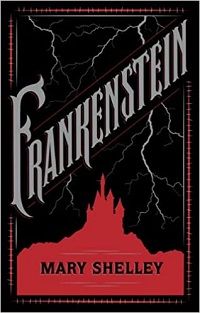
Frankenstein by Mary Shelley (1818)
Widely regarded as the grandmother of all sci-fi novels, Mary Shelley's Frankenstein not only laid the foundation for science fiction as an exploration of what happens when Man plays God, but also asked the timeless question: what is it that makes us human?

Blake, or the Huts of America by Martin R. Delany (1859-1862)
Dhalgren author Samuel R. Delany — no relation — once called Blake, or the Huts of America "about as close to an sf-style alternate history novel as you can get." Serialized in The Anglo-African Magazine between 1859 and 1862, Martin R. Delany's novel imagines the after-effects of a widespread slave uprising in the Caribbean and the American South, led by a free-born enslaved man whose wife is sold away from him.
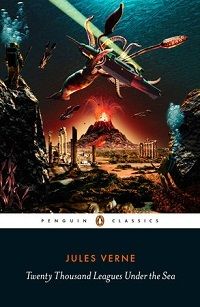
Twenty Thousand Leagues Under the Sea by Jules Verne (1869)
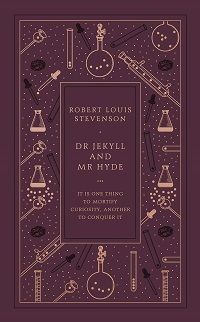
The Strange Case of Dr. Jekyll and Mr. Hyde by Robert Louis Stevenson (1886)
Victor Frankenstein might be the first hubristic scientist in literary history, but the trials and tribulations of Robert Louis Stevenson's well-meaning Dr. Jekyll would be rehashed for years to come as the archetypal "mad scientist." Since its publication in 1886, Jekyll's fight with Mr. Hyde has inspired parody and pastiche alike, from The Incredible Hulk to The Nutty Professor to Family Matters.
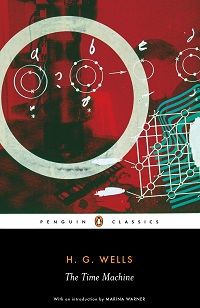
The Time Machine by H.G. Wells (1895)
Time travel. Human evolution. Post-apocalyptic visions of Earth. Cli-fi (climate fiction). H.G. Wells's The Time Machine has all of these sci-fi staples and more. Here, the unnamed Time Traveller goes some 800 millennia or so into the future to find that human evolution has divided along class lines. He then goes eons further, and although Wells's imagining of a post-apocalyptic landscape may differ from those we see today, his speculations on the effects of industrialization can be read as proto-climate fiction.
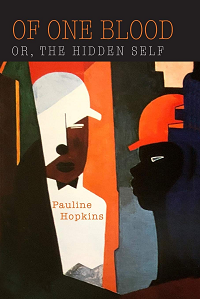
Of One Blood, or The Hidden Self by Pauline Hopkins (1902-1903)
Pauline Hopkins's Of One Blood follows Reuel, a Harvard-educated mixed-race man who passes for white, who uncovers mind-blowing truths about Africa's history — and its present — when he stumbles upon a technologically advanced underground civilization beneath an archeological dig site in Ethiopia. Fans of Black Panther and Nnedi Okorafor's Africanfuturist novels will recognize much here.
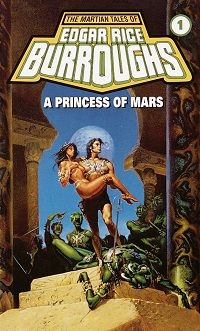
A Princess of Mars by Edgar Rice Burroughs (1912)
Whether you love 'em or hate 'em, pulpy adventures have had a strong presence in the sci-fi world for more than a century. Tarzan creator Edgar Rice Burroughs also penned this novel, the first of many 11 books about his fictional "Uncle Jack," AKA John Carter of Mars. Although the novel's depictions of women and people of color leave a lot to be desired — Carter is a Civil War veteran who fought for the Confederacy and, well, just look at that cover — A Princess of Mars and the works that followed it set the standard for pulp sci-fi for decades to come.

We by Yevgeny Zamyatin (1924)
Yevgeny Zamyatin's We appeared in print in English 30 years before the original Russian version was published. One of the first dystopian novels, We introduces readers to the One State: a unified world government that demands conformity of its citizens, who live and work in glass buildings, and have numbers instead of names. Zamyatin's vision of a terrible future inspired a number of writers who appear on this list, including George Orwell, Kurt Vonnegut, and — possibly — Aldous Huxley.
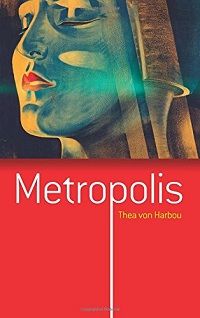
Metropolis by Thea von Harbou (1925)
Existential dread over automation might have begun with the Luddites in the early 19th century, but Thea von Harbou dragged their fears into the modern age with her 1925 novel. Like Wells's Time Machine, Metropolis envisions a future in which the lower classes labor tirelessly underground so that the rich can live in the lap of luxury above. Von Harbou's novel created a domino effect of interpretations in other media, inspiring the 1927 film — directed by the author's husband, Fritz Lang — that inspired Osamu Tezuka's 1949 manga, which in turn led to a 2001 anime film — all of the same name.
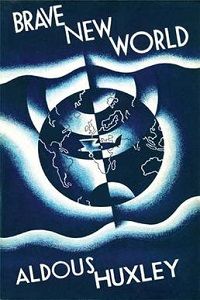
Brave New World by Aldous Huxley (1932)
Aldous Huxley's best-known novel takes place in a far-future version of London, one marked by free love, mandatory drug consumption, and the total destruction of the nuclear family. In the midst of all this is John, the "natural-born" — read: gestated and birthed by a human being — son of an ostracized World State citizen, who is transported to London after spending his entire life on a "Savage Reservation," but finds the so-called comforts of his new home unbearable.
The Collected Stories of Arthur C. Clarke by Arthur C. Clarke (1937-1999)
It's hard to imagine any writer working to reconcile religion and science with more intent than Arthur C. Clarke. In stories like "The Star," "siseneG," and "The Nine Billion Names of God," Clarke wrestles with the nebulous concept of a higher power in a technologically advanced age. It's impossible to pick just one of his short stories, or even one of his novels, to feature here, so allow me the opportunity to recommend more than 60 years of his short fiction collected in one volume.
The Complete Robot by Isaac Asimov (1939-1977)
It's hard to pick just one of Isaac Asimov's books to include on this list, but the ubiquitousness of his Three Laws gives The Complete Robot a positronic leg up on its competition. The Three Laws of Robotics govern most synthetic life forms in Isaac Asimov's short stories and have been widely adopted by sci-fi writers looking to set parameters for their AIs — or subvert them. Published in 1982, The Complete Robot collects 31 of Asimov's short stories about automatons, in all shapes and sizes.
Shadow Over Mars by Leigh Brackett (1944)
Also published as The Nemesis from Terra, this debut novel from the "Queen of the Space Opera" follows Rick Urquhart: an impoverished, ne'erdowell drifter who just so happens to be the prophesied savior fated to rule over all of Mars. An über-tough guy who plays by his own rules, Rick will have to face off against Martian royalty and corporate interests alike in order to realize his destiny. Shadow over Mars is pulpy, it's prototypical, and it's largely overlooked.
Nineteen Eighty-Four by George Orwell (1949)
This one is so influential that everyone knows it, even if they haven't read it. George Orwell's seminal dystopian novel introduced plenty of new words and phrases into the English lexicon — including Big Brother, doublethink, newspeak, and thoughtcrime — and may have predicted the rise of smartphone data collection. Although We predates Orwell's novel by a quarter century, Nineteen Eighty-Four created a blueprint for dystopian fiction that's still in use today.
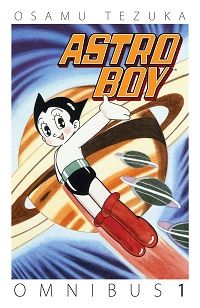
Astro Boy by Osamu Tezuka (1952-1968)
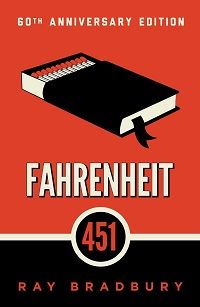
Fahrenheit 451 by Ray Bradbury (1953)
"It was a pleasure to burn." It's one of the best-known first lines in literature, and it comes from a novel that's on par with Nineteen Eighty-Four, at least as far as being misinterpreted goes. Ray Bradbury confirmed to L.A. Weekly in 2007 that Fahrenheit 451 is about the fear that television would one day crowd out books, not government censorship or McCarthyism. I think most of us would agree that Roland Barthes's theories on the death of the author applies here, however. Even if you agree with Bradbury, Fahrenheit 451's influence stems from its interpretation as a piece of anti-censorship literature, not a warning against the evils of television.
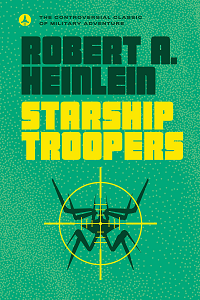
Starship Troopers by Robert A. Heinlein (1959)
Space wars and buglike aliens still abound in sci-fi today, thanks in large part to Robert A. Heinlein's Starship Troopers. If you've only seen the 1997 movie adaptation starring Casper Van Dien, you may come away from this novel disappointed. The tongue-in-cheek humor isn't part of the original text; where the movie satirizes the fascist society its human characters are dying to defend, Heinlein's novel plays it straight, and often seems to advocate for practices — total war, capital punishment, etc. — many may find distasteful. Although Starship Troopers isn't a novel suited to everyone's taste, there's no denying its impact on the military sci-fi sub-genre.
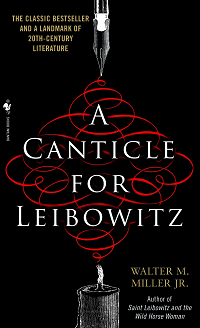
A Canticle for Leibowitz by Walter M. Miller Jr. (1959)
Let's talk apocalypse and what comes after. You can't throw a rock without hitting a post-apocalyptic story these days. In fact, they've been a genre staple since Mary Shelley published her plague novel, The Last Man, in 1826. It should come as no surprise, then, that Walter M. Miller's only novel, the post-apocalyptic A Canticle for Leibowitz, is a Hugo Award winner that has never gone out of print. One of the first sci-fi novels to have crossover appeal, Canticle examines the impact of nuclear war on a broken-down secular society and the Catholic monastery trying to minister to it.
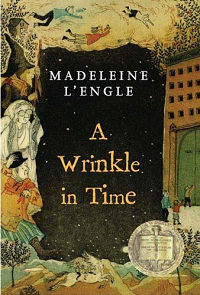
A Wrinkle in Time by Madeleine L'Engle (1962)
If science fiction has a gateway drug, A Wrinkle in Time is it. Writing for Early Bird Books, Molly Reiniger points out that Madeleine L'Engle's novel for children "created the space, especially for girls, to be interested in science fiction and fantasy, and to go on to be dedicated readers and writers of the genre." The novel follows a group of child heroes and their fairy godmother-esque guides as they travel from dimension to dimension, à la Jonathan Swift's Gulliver or Wells's Time Traveller. If you're a lifelong sci-fi fan or a woman working in a STEM field, there's a chance it's because of L'Engle.
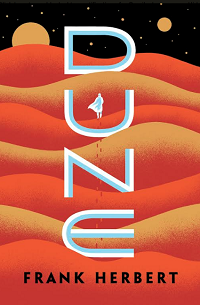
Dune by Frank Herbert (1965)
It's impossible to talk about the most influential sci-fi books of all time without talking about Dune. In his 1965 bestseller, Frank Herbert rolls court intrigue, witchcraft, climate change, the clash of civilizations, and elements of military sci-fi into a Chosen One narrative about a teenage Messiah. Dune inspired Star Wars and Hayao Miyazaki's Nausicäa of the Valley of the Wind. Its 1992 video game adaptation, Dune II: The Building of a Dynasty, "is widely regarded as the first modern real-time strategy (RTS) game," according to Vintage Games co-authors Bill Loguidice and Matt Barton.
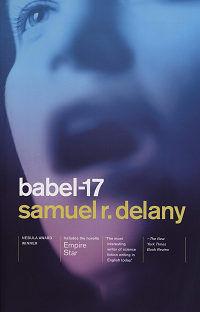
Babel-17 by Samuel R. Delany (1966)
Although it's not Delany's best-known work — that honor belongs to 1975's Dhalgren — Babel-17 was highly influential upon its release for its use of, and play with, language. This is one of the first, if not the first, sci-fi explorations of the Sapir-Whorf hypothesis in action. The story here centers on a former military cryptographer tasked with deciphering the titular code, used by enemy forces ahead of attack maneuvers. As it turns out, Babel-17 is no code, but a language, and Delany's heroine dives deep to learn as much as she can about how it functions.
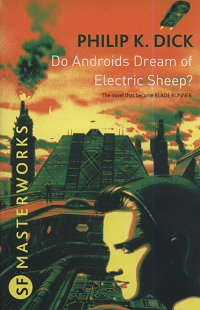
Do Androids Dream of Electric Sheep? by Philip K. Dick (1968)
A century and a half after Mary Shelley cracked open the question of what makes us human, Philip K. Dick dumped that can of worms out onto the page to create what remains one of the most influential sci-fi novels ever written. The basis for Ridley Scott's Blade Runner, Do Androids Dream of Electric Sheep? centers on a blue-collar assassin tasked with hunting down humanoid robots who have escaped servitude on Mars for a chance at freedom on Earth.
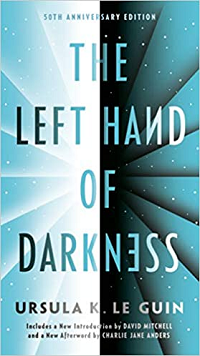
The Left Hand of Darkness by Ursula K. Le Guin (1969)
I would hope that, by this point in this list, I've put any arguments about the "sudden" politicization of science fiction to rest. If you're still unconvinced, check out Ursula K. Le Guin's The Left Hand of Darkness, which follows humanity's emissary to an intergalactic council — a council with which the people of Terra wish to unite — as he navigates life among an alien race whose members are expected to live as male, female, and agender over the course of their lives. The first novel in Le Guin's Hainish Cycle, The Left Hand of Darkness forced open the door for future science fiction writers to critique gender in their work.
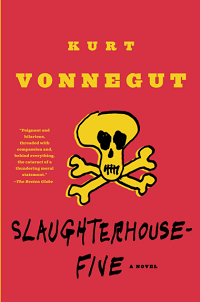
Slaughterhouse-Five by Kurt Vonnegut (1969)
Another sci-fi novel with broad crossover appeal, Slaughterhouse-Five stands out for its depiction of post-traumatic stress disorder as time travel. In the novel, World War II veteran Billy Pilgrim becomes "unstuck in time," to the extent that flipping a light switch can transport him to another planet or send him back to the firebombing of Dresden. Possibly Kurt Vonnegut's most famous novel, Slaughterhouse-Five offers up a thoughtful examination of the fallout of war in a not-quite-military sci-fi novel.
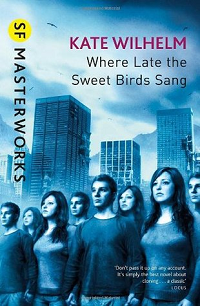
Where Late the Sweet Birds Sang by Kate Wilhelm (1976)
Kate Wilhelm's Where Late the Sweet Birds Sang imagines a post-apocalyptic future in which humanity has attempted to circumvent rampant infertility through a dedicated cloning program. The novel made Wilhelm the second woman ever to win the Hugo Award for Best Novel — following Ursula K. Le Guin, who won for both The Left Hand of Darkness and The Dispossessed — but its influence may pale in comparison to that of the author, who co-founded the Clarion Workshop.
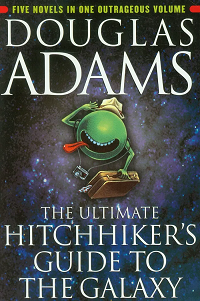
The Ultimate Hitchhiker's Guide to the Galaxy by Douglas Adams (1979-1992)
Whether you're cheeky enough to call a five-book series — six, if you count Eoin Colfer's And Another Thing… — a "trilogy," base an entire series around the adventures of one bumbling Englishman who stumbles unawares into being the last living Earth-man, or make the Earth's destroyers into aliens who write poetry so bad it literally hurts, nobody does sci-fi comedy quite like Douglas Adams. The Hitchhiker's Guide to the Galaxy trilogy has assisted in naming two separate species, two asteroids, and a NASA project, making it five — or six — of the most influential sci-fi books of all time…and that's without mentioning the ubiquity of 42.
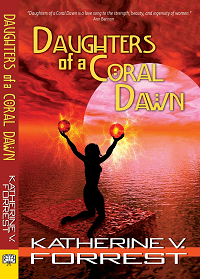
Daughters of a Coral Dawn by Katherine V. Forrest (1984)
It's a story reminiscent of Laura Lam's Goldilocks: a group of women set out from Earth to colonize a distant planet, away from patriarchal influence and persecution. After establishing her Eden, however, leader Megan finds herself conflicted when another, mixed-gender group of settlers — led by the devastatingly attractive Laurel — discovers her people and proposes an integration of their communities. An early work of lesbian sci-fi that gave way to a Lambda Literary Award–winning sequel, Daughters of a Coral Dawn is an oft-overlooked classic in the genre.
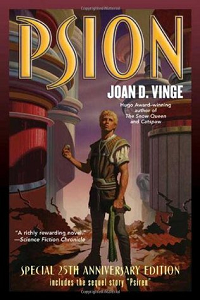
Psion by Joan D. Vinge (1982)
Two years before Neuromancer, there was Psion. Joan D. Vinge's trilogy — Psion, Catspaw, and Dreamfall — centers on Cat, a teenage alien-human hybrid and street urchin who trains in a government program as a special investigator after his telepathic abilities are discovered upon his most recent arrest. Recognized by the American Library Association as one of the Best Books for Young Adults, this 1982 release has inspired generations of young sci-fi fans to delve deeper into the genre.
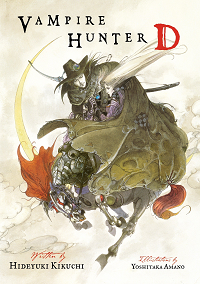
Vampire Hunter D by Hideyuki Kikuchi and Yoshitaka Amano (1983-Present)
From the bestselling author of Demon City Shinjuku and the famed illustrator of the first six Final Fantasy games comes Vampire Hunter D, the long-running light novel series about a half-vampire outcast who hunts down the Nobles — read: elite vampires — who once ruled his world. Having spawned 26 light novel sequels and counting, Vampire Hunter D offers up a thrilling, East-meets-Weird-West fusion that has inspired countless creatives since its 1983 debut.

Akira by Katsuhiro Otomo (1982-1990)
William Gibson may be the father of English cyberpunk literature, but Katsuhiro Otomo deserves the credit for birthing its Japanese cousin. The basis for the 1988 anime film of the same name, Akira centers on two teenage bikers whose lives in post–World War III Tokyo are upended when one of them develops psychic powers after being exposed to a government experiments.
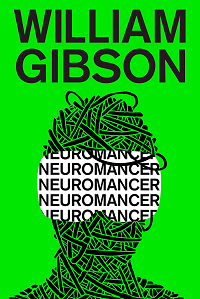
Neuromancer by William Gibson (1984)
How does a novel become synonymous with an entire sub-genre? Science fiction aficionados know that William Gibson's 1984 novel embodies the very essence of cyberpunk. Influential enough to warrant its own Encyclopedia Britannica entry, Neuromancer established cyberpunk's primary tropes and familiarized the sci-fi community with the concept of "cyberspace."
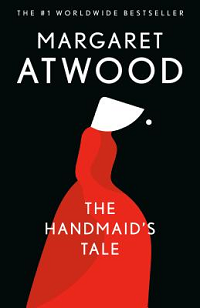
The Handmaid's Tale by Margaret Atwood (1985)
Margaret Atwood's dystopian bestseller continues to draw comparisons in contemporary politics, nearly 40 years after it first appeared on store shelves. And, much like Nineteen Eighty-Four, many of those comparisons ignore critical features — such as the white supremacy at the heart of Gilead — that make The Handmaid's Tale such a grim reminder of how close the U.S. often comes to a hellish tipping point.
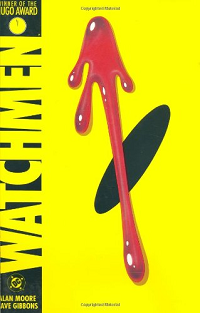
Watchmen by Alan Moore and Dave Gibbons (1986-1987)
If you're a fan of Invincible, The Boys, or any other series that depicts superheroes as, well, not so super, you have Alan Moore and Dave Gibbons's Watchmen to thank. This limited series questioned the moral superiority and valor of superheroes, presenting them as power-drunk titans, reluctant saviors, and questionable guardians of humanity — an angle that creators are still exploring today.
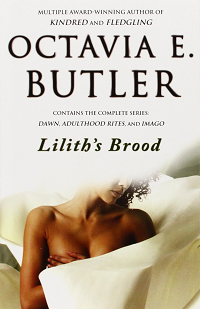
Lilith's Brood by Octavia E. Butler (1987-1989)
Originally published in a single volume as Xenogenesis in 1989, Lilith's Brood compiles three connected novels — Dawn, Adulthood Rites, and Imago — from Octavia E. Butler. The story here centers on what's left of humanity, "rescued" from a nuclear-scarred Earth by the Oankali: a many-tentacled alien race who wish to breed with humans to introduce cancer to their species. It's weird. It's intense. And it's kind of sexy, if tentacle sex and monster…erm…loving is your thing. I'm not saying that Lilith's Brood was the start of the monster-loving trend, but I'm not not saying it, either.
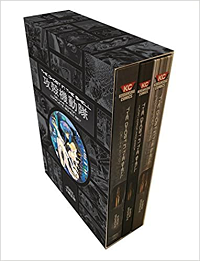
Ghost in the Shell: Deluxe Complete Box Set by Masamune Shirow (1989-1997)
Another Japanese cyberpunk series, Masamune Shirow's Ghost in the Shell has proven to be one of the most influential manga and anime franchises of all time. As The Guardian's Steve Rose pointed out back in 2009, no less than the Wachowski sisters, James Cameron, and Steven Spielberg have drawn inspiration from Shirow's manga and its animated adaptations.
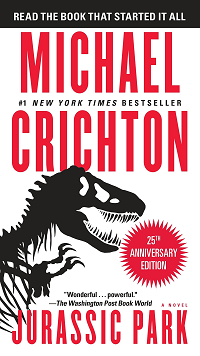
Jurassic Park by Michael Crichton (1990)
Speaking of Spielberg, 1993's Jurassic Park brought millennials' newfound love of dinosaurs — a love stoked, in part, by 1988's The Land Before Time, which Spielberg produced — to more-grown-up audiences. We might never have gotten to see Dr. Grant and Ellie Sattler run for their lives on the big screen if it weren't for this 1990 novel from sci-fi-thriller author Michael Crichton, however.
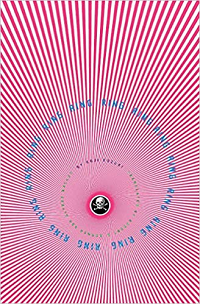
Ring by Koji Suzuki (1991)
J-horror fans owe a lot to Koji Suzuki's Ring, which inspired several popular films made in the U.S., Japan, and South Korea, ushering in a new era of onryō-themed horror. Don't let all this talk of chilling ghosts and blood-curdling frights fool you, though, because Ring is 100% a sci-fi mystery, one in which a mysterious illness, not necessarily Sadako herself, is responsible for killing anyone who watches her infamous videotape.
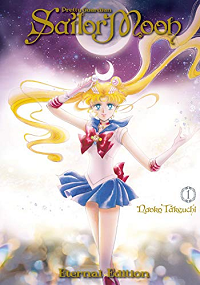
Pretty Guardian Sailor Moon by Naoko Takeuchi (1991-1997)
Sailor Moon isn't the original magical-girl manga, but it may certainly be the most famous. Naoko Takeuchi's 1990s space-fantasy series transformed the mahou shoujo genre forever by turning Usagi Tsukino and her friends into superheroes and emphasizing the importance of stereotypically "girly" interests, such as makeup, fashion, and all things cute.
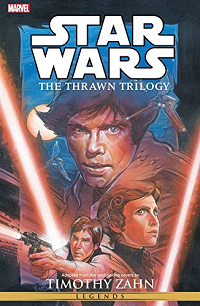
The Thrawn Trilogy by Timothy Zahn (1991-1993)
I know what you're thinking. An IP series? On a list like this? Like it or not, Timothy Zahn's Thrawn trilogy was the definitive continuation of the Skywalkers' story for a generation of readers before the movie sequel trilogy. Although they're no longer canon, Zahn's Heir to Empire, Dark Force Rising, and The Last Command remain some of the greatest adventures ever written for sci-fi's most recognizable heroes.
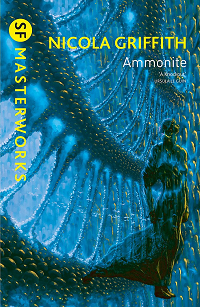
Ammonite by Nicola Griffith (1992)
A Lambda and Tiptree Award-winner, Nicola Griffith's Ammonite follows an anthropologist to a colonized planet where a viral outbreak has killed many and changed the very makeup of the remaining survivors. Like Charlotte Perkins Gilman's Herland, Ammonite devotes its time and attention to fleshing out what a world run by women would really look like — for better or for worse. It's certainly not the first to cross this territory, but Griffith's novel stands out as one of the finest examples of feminist science fiction ever written.
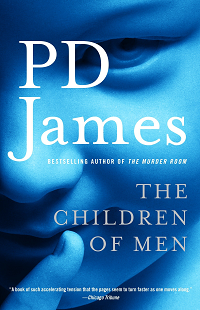
The Children of Men by PD James (1992)
Ranked as one of the BBC Arts "100 Novels That Shaped Our World" in 2019, PD James's Children of Men imagines a near-future in which humanity's inexplicable and near-total sterility has caused the breakdown of society around the globe. The novel's post-pandemic setting — in this case, a flu pandemic in 2008 — and its depiction of a society willing to sacrifice its weakest members will ring true, and perhaps painfully so, for modern-day readers.
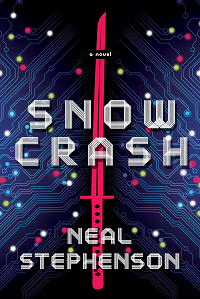
Snow Crash by Neal Stephenson (1992)
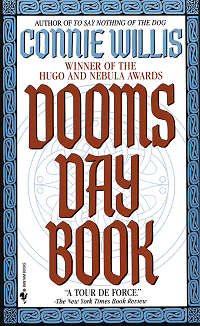
Doomsday Book by Connie Willis (1992)
A Hugo and Nebula winner, Connie Willis's Doomsday Book follows a time-traveling historian to 14th century Oxford, where she becomes stranded in the midst of the Black Death, thanks to a global influenza outbreak spreading in her home time. A treat for all readers, Doomsday Book will particularly tickle fans of other stories about time-traveling academics, such as Jasper Fforde's The Eyre Affair and Genevieve Cogman's The Invisible Library.
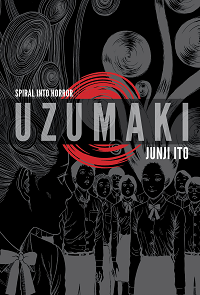
Uzumaki by Junji Ito (1998-1999)
No one does horror manga like Junji Ito. Nowhere is the creator of Tomie and Remina better than in Uzumaki. Subtitled "Spiral into Horror," this three-part manga series is a supernatural thrill-ride that effortlessly combines time travel with body horror. Although Ito's influence is undoubtedly strongest within the horror genre, the weirdness of his work earns him a well-deserved place on this list.
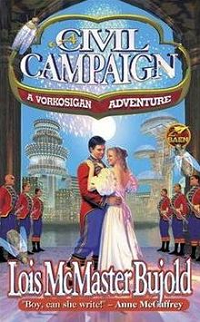
A Civil Campaign by Lois McMaster Bujold (1999)
These days, it's not uncommon to find sci-fi and fantasy novels with significant romantic subplots, but Lois McMaster Bujold's A Civil Campaign is in a league of its own. Blending together Regency romance, cozy mystery, and space opera, this entry in Bujold's Vorkosigan Saga is an utter delight to read. Long before Pride and Prejudice and Zombies made mashup novels into dinner-table talk, A Civil Campaign had sci-fi fans swooning on the edges of their seats.


Comments
Post a Comment